B2B Sales Automation Software That Does the Writing, Not Just the Scheduling
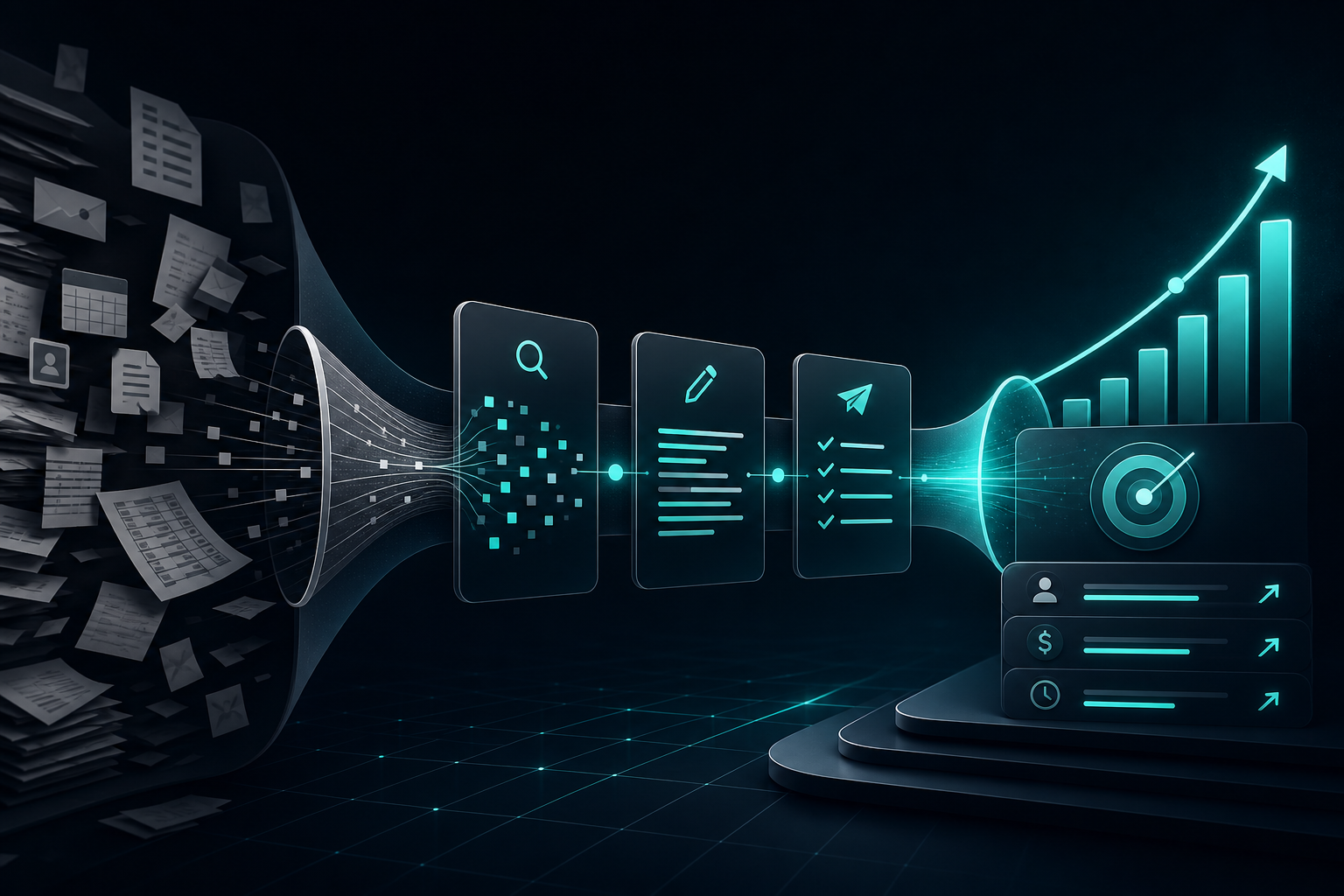
For the last fifteen years, the B2B sales industry has operated under a collective delusion about the word "automation."
When GTM leaders search for "B2B sales automation software," they are usually sold a sequencer. They are sold platforms like Outreach, Salesloft, or Lemlist—tools that are fundamentally digital mailmen. These platforms are incredibly efficient at delivering messages at scale, tracking open rates, and managing complex follow-up schedules. But they share a fatal flaw: they require a human being to research the prospect, synthesize the data, and write the actual message.
In 2026, automating the delivery of a message is no longer a competitive advantage. It is baseline table stakes. As Forrester recently reported, average cold email reply rates have collapsed to a staggering 3.43% because buyers are inundated with 120+ automated sales emails per week. The old playbook of blasting 500 mail-merge templates and hoping for a 1% conversion rate is entirely dead.
Today’s buyers are hyper-informed, deeply skeptical, and aggressively guarded. According to a 2026 Gartner survey of B2B buyers, 67% now explicitly prefer a completely rep-free experience. If your outreach doesn't instantly demonstrate that you understand their specific business context, their exact role, and their current strategic initiatives, you will be ignored.
This creates an impossible mathematical tension for growing B2B SaaS companies, agencies, and lean sales teams. You know that hyper-personalized outreach works (yielding 8–15% reply rates). But personalizing at scale requires hours of deep research—reading company news, scraping LinkedIn profiles, and synthesizing value propositions. A human Sales Development Representative (SDR) simply cannot do this for 100 accounts a day. They burn out, they resort to generic templates, and your pipeline dries up.
True B2B sales automation in 2026 does not mean automating the sending. It means automating the cognitive labor of sales: the research, the strategic synthesis, the copywriting, and the quality control.
This comprehensive guide breaks down the current state of B2B sales automation, why legacy platforms are failing modern outbound teams, and how the next generation of AI-native platforms—like AmroGen—are fundamentally redefining what it means to automate a sales pipeline.
SERP Analysis: The Gap in the B2B Sales Automation Market
Before diving into the mechanics of modern sales automation, it is crucial to understand the landscape of the market itself. If you analyze the Search Engine Results Page (SERP) for the primary keyword "b2b sales automation software" (Keyword Difficulty: 72, Search Volume: 5,500), a distinct pattern emerges.
The results are heavily dominated by enterprise behemoths: Salesforce, HubSpot, and Outreach. These platforms have massive domain authority and define "sales automation" through an enterprise lens. To them, automation means complex CRM routing rules, automated lead scoring handoffs between marketing and sales, and rigid sequence scheduling across a 5,000-person global sales floor.
The Enterprise Bias
When enterprise tools talk about sales automation, they assume you already have three things:
- A massive, pristine database of leads (which you pay ZoomInfo or Apollo hundreds of thousands of dollars for).
- A dedicated Revenue Operations (RevOps) team to stitch these tools together, manage API limits, and clean data.
- An army of SDRs or copywriters to sit inside these tools and draft the actual messaging.
The Opportunity for Lean Teams
This enterprise dominance masks a massive gap in the market. Who is building sales automation for the Series A startup founder doing founder-led sales? Who is building for the boutique agency owner, or the lean 4-person AE team that doesn't have a dedicated SDR function?
These users don't need complex Salesforce routing rules. They need pipeline.
The search intent behind long-tail variations like “b2b sales automation software for small teams” or “b2b sales automation without CRM” reveals a deep frustration with legacy tools. Lean teams are tired of paying for software that is essentially an empty vessel. They don't want a tool where they have to bring their own leads and write their own copy. They want a tool that does the work.
This is the exact gap AmroGen fills. While HubSpot and Salesforce automate the management of your pipeline, AmroGen automates the creation of it. By shifting the focus from "CRM management" to "cognitive task automation," lean teams can punch infinitely above their weight class, achieving the output of a 10-person SDR team without the headcount.
Part 1: The Evolution of B2B Sales Automation Software
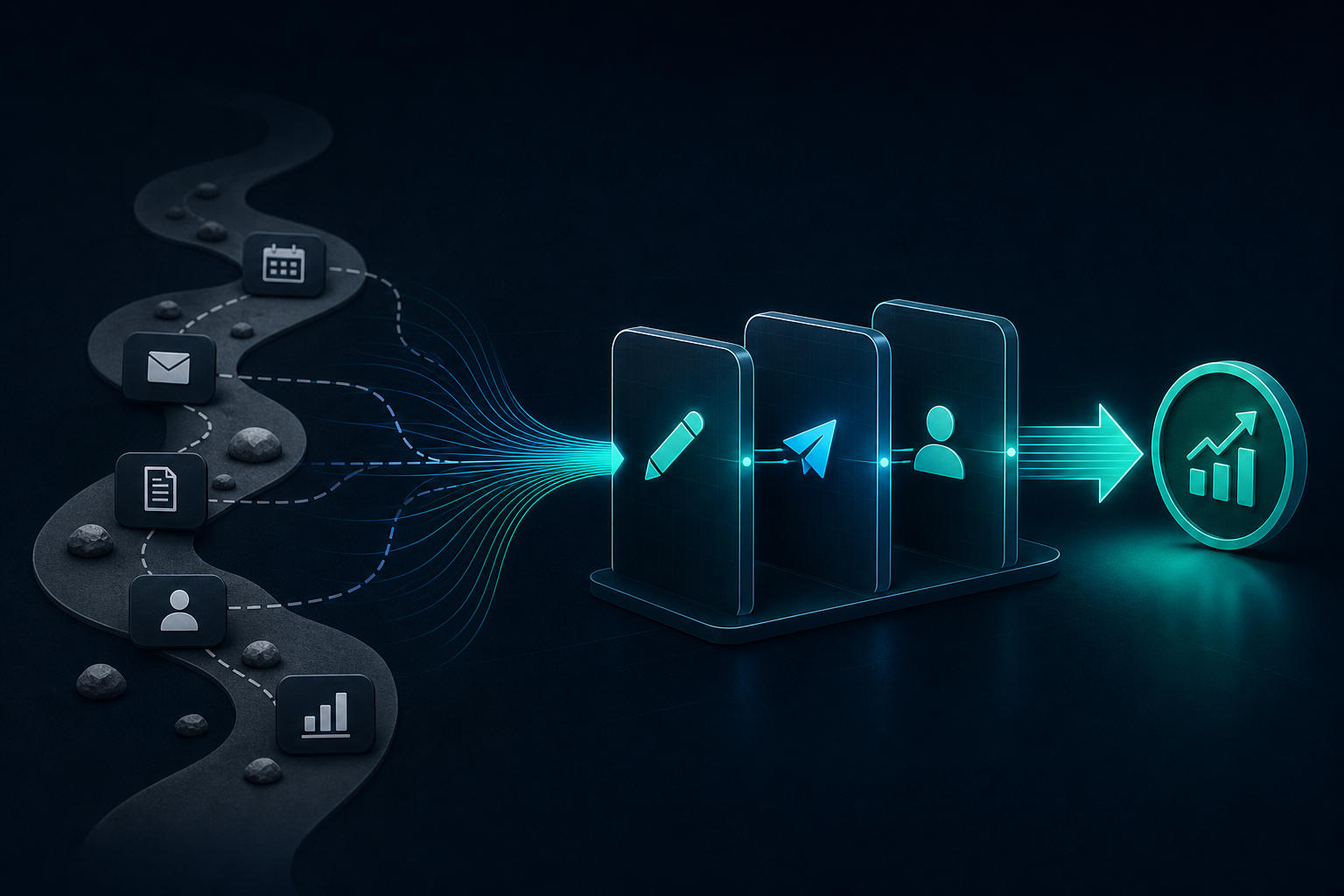
To understand why traditional sales automation is failing, we must trace how we got here. The software stack has evolved through four distinct eras, each solving the bottlenecks of the previous generation, but inevitably creating new ones.
Era 1: Systems of Record (1990s–2000s)
- The Tools: Siebel Systems, early Salesforce.
- The Core Function: Digitizing the Rolodex.
- The Problem Solved: Reps were losing track of who they called and when. CRMs provided a centralized database to log activities.
- The New Bottleneck: Data entry. Reps spent more time logging calls than making them. The system didn't do anything; it just sat there demanding to be fed.
Era 2: Systems of Engagement (2010s)
- The Tools: Outreach, Salesloft, Yesware.
- The Core Function: The Predictable Revenue model. Automating the scheduling and delivery of emails and calls.
- The Problem Solved: Reps could now send 500 emails a day instead of 50. The sequencer remembered to follow up on day 3, day 7, and day 14.
- The New Bottleneck: The Template Trap. Because sending became frictionless, everyone did it. Inboxes flooded with generic
Hi {{First_Name}}, noticed you work at {{Company}}emails. Reply rates plummeted. The bottleneck shifted from sending to writing something worth reading.
Era 3: Systems of Intelligence & Enrichment (2020s)
- The Tools: Apollo, ZoomInfo, Clay, Gong.
- The Core Function: Finding contact data and enriching it with intent signals (e.g., "Company X just raised Series B").
- The Problem Solved: Teams could now easily find email addresses and basic triggers to theoretically personalize their outreach.
- The New Bottleneck: The "Frankenstack." Teams now had incredible data, but they had to manually move it from ZoomInfo into a spreadsheet, write custom logic in Clay to interpret it, push it to ChatGPT to write a snippet, and then sync it to Lemlist to send. The operational overhead required a full-time RevOps engineer just to keep the stack from breaking.
Era 4: Systems of Action & Agentic Workflows (2026–Present)
- The Tools: AmroGen.
- The Core Function: End-to-end cognitive automation via AI Agents.
- The Problem Solved: Consolidating discovery, research, synthesis, copywriting, quality control, and sending into a single, seamless pipeline.
- The New Reality: You provide a target company URL. The system autonomously discovers the decision-makers, researches their specific context, writes hyper-personalized multi-channel sequences (Email, LinkedIn, SMS), reviews its own work for quality, and queues it up to send directly from your Gmail.
As McKinsey notes in their recent analysis of generative AI in B2B sales, this shift toward AI-driven action can open up an incremental $0.8 trillion to $1.2 trillion in productivity. The teams winning in 2026 are not the ones with the most complex tech stacks; they are the ones utilizing autonomous agents to execute the cognitive heavy lifting.
Part 2: The Core Problem with Legacy Sales Automation
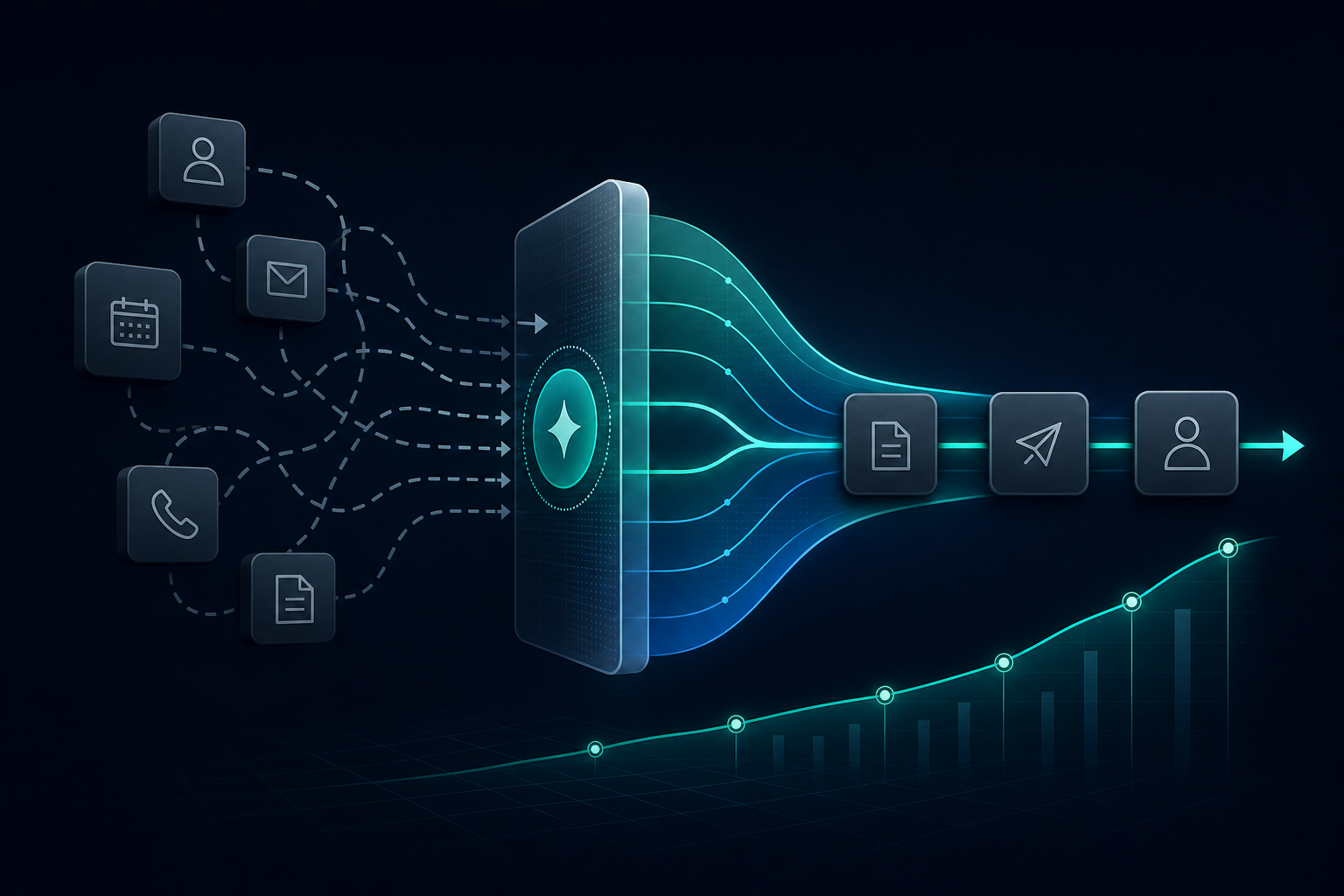
If you are a VP of Sales, a Founder, or an SDR, you likely feel a profound emotional tension regarding outbound sales. You know that personalized outreach works. When you take 30 minutes to deeply research a prospect, read their recent LinkedIn posts, understand their company's 10-K report, and write a thoughtful, highly specific email, they often reply.
The problem is math.
The SDR Economic Dilemma
Let’s break down the economics of a traditional Sales Development Representative in 2026.
- Base Salary + Commission (OTE): $80,000 – $100,000+
- Fully Loaded Cost (Taxes, Benefits, Software Licenses): $120,000+
- Ramp Time: 3 to 4 months before they are fully productive.
- Average Tenure: 14 months.
What are you paying this $120,000 for? If you look at time-motion studies of modern sales teams, an SDR spends roughly 70-80% of their day doing research and data entry. They are bouncing between LinkedIn Sales Navigator, company websites, and Apollo trying to figure out who to contact and what to say. They spend only 20% of their time actually having conversations with buyers.
You are paying six figures for a highly inefficient human web scraper and copywriter.
The Template Trap
When SDRs inevitably fall behind on their activity metrics (because manual research takes too long), they panic and resort to templates. They use legacy B2B sales automation software (like Outreach or Instantly) to blast generic messages.
The result? The emails look like this:
"Hi John, I saw you are the VP of Sales at Acme Corp. We help companies like Acme Corp streamline their operations. Do you have 15 minutes next Tuesday?"
This is not personalization. This is mail-merge. And in 2026, buyers are entirely blind to it. Gartner's 2026 B2B Sales Survey reveals that the average B2B sales cycle has extended to 102 days, largely because buyers are actively avoiding early interactions with sellers who provide zero upfront value.
The "DIY AI" Frankenstack
To combat low reply rates, tech-savvy RevOps teams have spent the last two years trying to stitch together AI solutions. The typical playbook looks like this:
- Scrape a list of 1,000 leads from Apollo.
- Export to a CSV.
- Upload the CSV to Clay.
- Run 15 different enrichment waterfalls to find news articles and LinkedIn bios.
- Send that data via API to OpenAI (ChatGPT) or Anthropic (Claude) with a massive, complex prompt to write an email intro line.
- Export the AI outputs back to a CSV.
- Upload the CSV to Lemlist or Smartlead.
- Map the custom variables.
- Hit send.
This approach works, but it is incredibly fragile. If an API key expires, the pipeline breaks. If ChatGPT hallucinates and writes "I saw you recently achieved [Insert Milestone]", it ruins your brand reputation. It requires a dedicated RevOps engineer to manage, putting it completely out of reach for lean teams, founders, and individual AEs who just want to sell.
Part 3: Redefining Automation (Research + Writing + Quality Control)
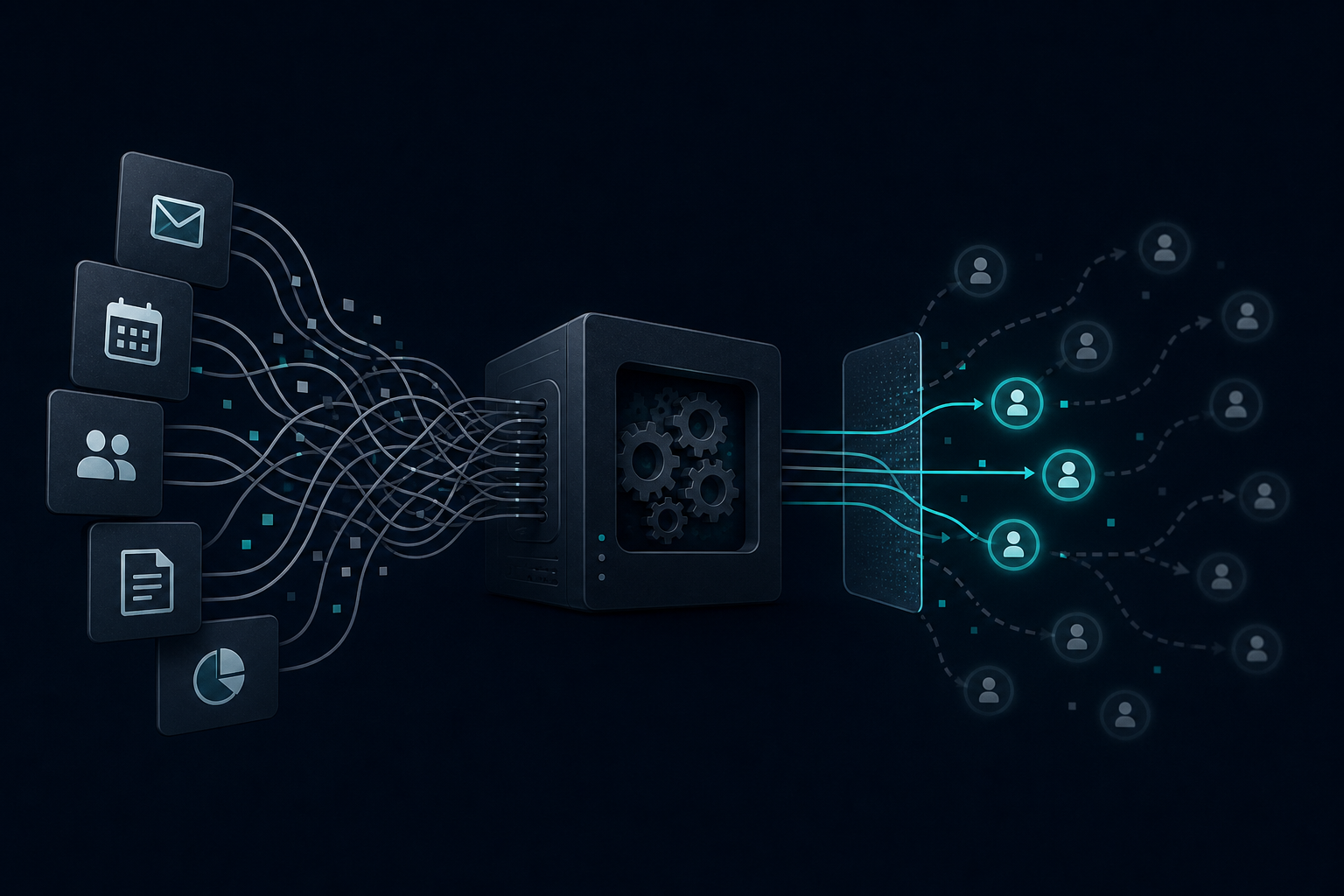
To fix B2B outbound, we have to redefine what "sales automation software" actually means. It can no longer just be about moving data from Point A to Point B. It must be about automating the thinking process of an elite SDR.
When an elite SDR approaches a target account, they execute a highly specific cognitive workflow. True automation must replicate this exact workflow autonomously.
Step 1: Account Contextualization
Before looking for leads, you must understand the company. What do they sell? Who do they sell it to? What is their current market position? Are they hiring? Did they just launch a new product?
- Legacy Tools: Require you to read the website yourself.
- Modern Automation: Scrapes the target URL, reads the 'About Us', 'Careers', and 'News' pages, and builds a comprehensive semantic understanding of the business in seconds.
Step 2: Decision-Maker Discovery
You don't want to email everyone at the company. You need the specific people who hold the budget for your solution.
- Legacy Tools: You run a boolean search in ZoomInfo and hope the database is up to date (it often isn't).
- Modern Automation: Dynamically searches the web and professional networks in real-time to find the current decision-makers, verifying their roles and contact information on the fly.
Step 3: Hyper-Personalized Copywriting
This is the hardest part. Taking the company context, combining it with the individual lead's background, and weaving it into a concise, non-salesy message that maps to your product's value proposition.
- Legacy Tools:
{{First_Name}}merge tags. - Modern Automation: Uses Large Language Models (LLMs) to draft entirely unique emails, LinkedIn messages, and SMS texts from scratch for every single lead.
Step 4: Quality Control (The Missing Link)
This is where 99% of AI wrappers fail. If you let an AI write 100 emails and send them automatically, it will inevitably send something weird, robotic, or hallucinated. An elite SDR has a manager who reviews their drafts. AI needs a manager, too.
- Legacy Tools: None. You have to manually read every AI-generated email before sending.
- Modern Automation: Employs an AI "Orchestrator" agent that critiques the writing of the AI "Copywriter" agent, forcing rewrites until the copy passes a strict quality threshold.
Part 4: The AmroGen Approach — Pipeline from a URL
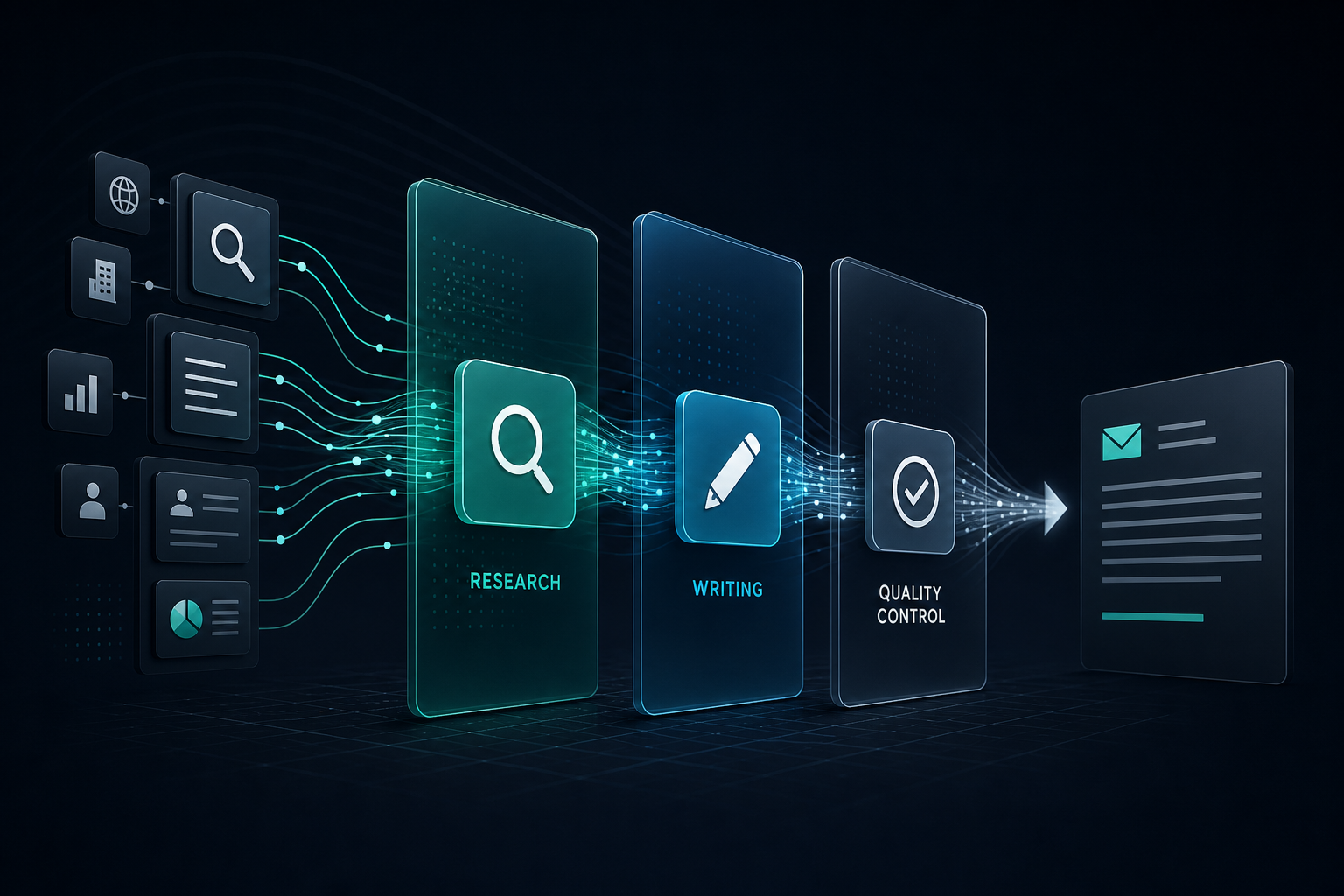
This brings us to how AmroGen has engineered the ultimate B2B sales automation software for 2026. AmroGen was built on a single, uncompromising premise: You should be able to input a target company URL and get reviewed, hyper-personalized outreach sequences through the agent pipeline—with human lead and sequence approval before anything sends.
Here is exactly how the AmroGen pipeline works, and why it fundamentally outperforms both legacy tools and human SDRs.
The 6-Agent AI Architecture
AmroGen does not use a single, generic AI prompt to do everything. It utilizes a coordinated pipeline of 6 purpose-built Anthropic Managed Agents. Just like a real sales floor has specialized roles (Researchers, Copywriters, Managers), AmroGen divides the cognitive labor.
- The Company Researcher Agent: You input a URL (e.g.,
acmecorp.com). This agent visits the site, reads the content, analyzes their market positioning, and identifies their likely pain points based on your product context. - The Lead Discoverer Agent: Based on your Ideal Customer Profile (ICP), this agent scours the web to find the exact decision-makers at Acme Corp (e.g., the VP of Sales, the Head of RevOps). It enriches them with email addresses (where available; some may be pattern-derived) and LinkedIn profiles.
- The Context Enricher Agent: This agent digs deep into the specific individuals. It looks at their recent LinkedIn activity, their career history, and specific company news to find "hooks" for the outreach.
- The Copywriter Agent: Armed with all this context, the Copywriter drafts a multi-channel sequence. It writes a 5-step email cadence, a 3-step LinkedIn connection and follow-up cadence, and an SMS script. It ensures the tone is conversational, concise, and heavily personalized.
- The Orchestrator Agent (The Manager): This is AmroGen’s secret weapon. Before you ever see the output, the Orchestrator reviews the Copywriter's work. It scores the personalization depth on a scale of 1 to 10. If the email sounds like a generic template (scoring below a 7), the Orchestrator rejects it and sends it back to the Copywriter with specific feedback for a rewrite. It will retry up to 3 times to ensure elite quality.
- The Delivery Agent: Once approved, this agent queues the sequence to send.
The entire process—from pasting the URL through lead review and sequence review before anything sends (agent runtime varies by account size).
Sending from Your Own Inbox (Safety First)
One of the biggest anxieties teams have with sales automation software is domain reputation. If you blast thousands of emails from a new domain, you will hit spam filters immediately.
AmroGen bypasses this entirely. It integrates directly with your existing Gmail account via OAuth. The emails send directly from your own inbox, acting exactly as if you typed them yourself and clicked send. Because the volume is controlled (AmroGen is about quality and personalization, not blasting 10,000 emails a day), there is no need for complex domain warm-ups. You review the Orchestrator-approved sequences, click approve, and the emails land in the primary inbox.
Built for the AI-Native Builder: REST API & MCP Server
While non-technical founders and AEs love AmroGen's intuitive web app, the platform is fundamentally built for the AI era.
AmroGen is the only B2B sales outreach platform that includes a built-in Model Context Protocol (MCP) server. This means you can expose AmroGen's entire capability set directly to AI assistants like Claude Desktop.
Imagine typing into Claude: "I just read an article about [Target Company]'s new funding round. Can you use AmroGen to find their Head of Growth, write a sequence referencing the funding, and queue it up for me?"
Because of the MCP integration, Claude can call AmroGen as a tool, execute the pipeline, and report back. You can embed AmroGen into any custom AI workflow, making it the ultimate infrastructure for → AI SDR tools.
Honest Limitations: When NOT to use AmroGen
We believe in being radically transparent about product fit. AmroGen is a pipeline generation engine. It is not a full-suite CRM.
If you are an enterprise organization with 500+ sales reps, 12-to-18-month sales cycles, complex multi-stakeholder routing rules, and a strict requirement for deep, bi-directional Salesforce syncs before a single email can be sent, you should use Outreach or Salesforce High Velocity Sales.
But if your primary problem is "We need more qualified meetings on the calendar, and we don't have the time to research and write personalized emails," AmroGen is the exact tool you need.
Part 5: The Economic Framework of Modern Outbound
To truly understand the value of modern B2B sales automation software, we have to look at the math. Let’s compare the three paths a GTM leader can take in 2026 to generate pipeline.
Scenario A: The Human SDR Model
You hire a Junior SDR to research accounts and write personalized emails.
- Cost: ~$100,000/year (fully loaded).
- Output: A good SDR can deeply research and write hyper-personalized sequences for about 20-30 leads per day (approx. 500-600 leads per month).
- Quality: High (when they aren't burned out).
- Risk: High turnover, 3-month ramp time, human error, sick days.
- Cost per Lead Researched & Sequenced: ~$14.00
Scenario B: The "Frankenstack" DIY Model
You hire a RevOps contractor to stitch together Apollo, Clay, ChatGPT, and Lemlist.
- Cost: Apollo ($1,200/yr) + Clay ($2,400/yr) + Lemlist ($1,000/yr) + OpenAI API costs ($500/yr) + RevOps Contractor ($15,000/yr for setup and maintenance) = ~$20,100/year.
- Output: Scalable, but highly dependent on workflow stability. Let's say 2,000 leads per month.
- Quality: Variable. Prone to AI hallucinations because there is no built-in Orchestrator QA loop.
- Risk: High technical debt. If one API changes, the whole system breaks.
- Cost per Lead Researched & Sequenced: ~$0.83 (plus massive time headaches).
Scenario C: The AmroGen Unified Pipeline
You use AmroGen to handle the end-to-end process.
- Cost: Subscription model based on pipeline runs. AmroGen charges 8 credits per pipeline run (~10 leads).
- Starter: $29/month (100 credits, ~12 runs, ~120 leads).
- Growth: $99/month (500 credits, ~62 runs, ~620 leads).
- Pay-as-you-go: $0.35/credit.
- Output: Unlimited scale based on your credit tier. one agent run per company (runtime varies).
- Quality: Elite. The 6-agent architecture and Orchestrator QA loop ensure every message sounds like a thoughtful human wrote it.
- Risk: Near zero. No tech debt, no API stitching, sends safely from your own Gmail.
- Cost per Lead Researched & Sequenced: ~$0.28 (at Pay-as-you-go rates; even lower on Growth/Scale plans).
The Verdict
AmroGen delivers the elite quality of a $100k/year human SDR at a fraction of the cost of a DIY Frankenstack, with zero technical setup required. For startups, agencies, and lean sales teams, the ROI is mathematically undeniable.
Part 6: Internal Linking & Platform Exploration
As you build out your outbound strategy, understanding how AmroGen's specific features map to your goals is critical. We highly recommend exploring the following resources on our platform to deepen your knowledge:
- Explore the AI Architecture: Want to understand exactly how our 6-agent system outperforms generic ChatGPT wrappers? Read our deep dive into the future of → AI SDR tools.
- Master Multi-Channel: Email is only one piece of the puzzle. Learn how AmroGen’s Copywriter agent natively weaves LinkedIn connection requests and SMS touchpoints into a cohesive strategy on our → AI Sequences feature page.
- Calculate Your ROI: Ready to see exactly how much you can save compared to hiring an SDR or paying for Apollo? Check out our transparent, credit-based → Pricing.
- Our Mission: Learn why we believe the future of sales is human-in-the-loop, AI-executed pipeline generation on our → About page.
Part 7: How to Build Your Automation Stack in 2026 (A Guide for Lean Teams)
If you are a Founder doing founder-led sales, or a VP of Sales managing a lean team of 3 AEs without SDR support, here is the exact playbook to set up your outbound motion this week.
Step 1: Define Your ICP (Ideal Customer Profile) Tightly
AI agents are brilliant, but they need direction. Do not say "B2B SaaS companies." Say: "Series A B2B SaaS companies in North America using Salesforce, who recently hired a VP of Marketing." The tighter your ICP, the higher AmroGen's ICP Fit Score will be when it evaluates leads.
Step 2: Build a Target Account List (Not a Lead List)
You no longer need to buy lists of 10,000 unemail addresses where available. Instead, build a list of 50 to 100 Target Companies (URLs). You can find these by looking at G2 competitors, searching Crunchbase for recent funding, or looking at attendees of a recent industry conference.
Step 3: Run the AmroGen Pipeline
Take your list of URLs and feed them into AmroGen.
- Go make a coffee.
- In the agent run, AmroGen's agents will map the organizations, find the decision-makers, read their digital footprints, and draft the multi-channel sequences.
- The Orchestrator will review and rewrite any weak copy behind the scenes.
Step 4: Human-in-the-Loop Review
This is critical. Do not fully automate the final step. When AmroGen presents the generated sequences, take 10 seconds to read them.
- Does the tone match your brand?
- Is the reference to the prospect's recent LinkedIn post accurate?
Because of the Orchestrator agent, 95% of the time you will simply click "Approve." But maintaining that final human sign-off ensures absolute brand safety.
Step 5: Execute Multi-Channel Delivery
AmroGen will automatically begin sending the emails from your connected Gmail account. Simultaneously, it will provide you with the exact LinkedIn connection request scripts and SMS texts to execute on days 2, 4, and 7 of the sequence.
By executing this workflow for just 30 minutes a day, a single Founder or AE can generate the highly personalized pipeline volume that used to require a team of three full-time SDRs.
Part 8: The Future of B2B Sales Automation
As we look beyond 2026, the trajectory of B2B sales automation is clear. The era of the "software platform as a destination" is ending.
This is why AmroGen's MCP (Model Context Protocol) server integration is so vital. In the near future, you will not log into a sales automation dashboard at all. You will simply speak to your overarching AI assistant (like Claude or an internal enterprise AI). You will say, "Identify 10 competitors to Acme Corp, find their Heads of Revenue, and initiate an aggressive displacement sequence."
Through MCP, your assistant will call AmroGen in the background, execute the 6-agent pipeline, and report back when the meetings are booked on your calendar. AmroGen is not just building software for today's SDRs; we are building the autonomous revenue infrastructure for the AI-native enterprise.
FAQ: People Also Ask
What is B2B sales automation software? B2B sales automation software refers to tools that streamline and execute repetitive tasks in the sales process. Historically, this meant automating the scheduling and sending of emails (e.g., Outreach, Salesloft). In 2026, modern B2B sales automation (like AmroGen) encompasses automating the cognitive tasks of sales: researching target accounts, finding researched decision-makers, and writing hyper-personalized outreach sequences using AI agents.
What is the best B2B sales automation tool? The "best" tool depends entirely on your company size and needs. For massive enterprise organizations with 500+ reps that require complex Salesforce integration and routing rules, legacy tools like Outreach or HubSpot are best. However, for startups, agencies, founders, and lean sales teams (1-10 reps) whose primary goal is generating pipeline without hiring SDRs, AmroGen is the best solution due to its ability to automate both research and copywriting from just a URL.
How does sales automation software work? Traditional sales automation works via simple "if/then" logic and mail-merge templates (e.g., "If day 3, send Template B with {{First_Name}}"). Modern AI-driven sales automation works via agentic workflows. In platforms like AmroGen, multiple AI agents divide the labor: one agent scrapes the target company's website, another finds the lead's contact info, a third writes a personalized email, and an Orchestrator agent reviews the quality before sending it via your own email inbox.
What is the difference between CRM and sales automation? A CRM (Customer Relationship Management) system, like Salesforce or HubSpot, is a System of Record. It is a database designed to store customer information, track deal stages, and forecast revenue. Sales automation software is a System of Action. It is designed to proactively reach out to prospects, generate leads, and book meetings. While some CRMs have basic automation features, dedicated sales automation tools are far more powerful for outbound pipeline generation.
Which is the most affordable B2B sales automation software? When calculating affordability, you must look at the total cost of ownership. Tools like Apollo or ZoomInfo may cost thousands of dollars annually, and still require you to write your own emails or stitch them together with tools like Clay. AmroGen is highly affordable because it consolidates data, writing, and sending into a credit-based model. At $29/month for the Starter plan, or ~$2.80 per pipeline run (approx. 10 leads) on Pay-as-you-go, it is a fraction of the cost of legacy tools and infinitely cheaper than hiring a human SDR.
Conclusion
The definition of B2B sales automation has fundamentally shifted. We are no longer living in a world where simply automating the delivery of a generic message constitutes a competitive advantage. Buyers have adapted, spam filters have hardened, and the old playbook is burning capital.
If your sales automation software requires you to bring your own lead lists, spend hours researching accounts, and write your own copy, it isn't automating sales. It is only automating the final click of the "Send" button.
AmroGen represents the new standard. By deploying a 6-agent AI architecture with a built-in Orchestrator for quality control, AmroGen allows lean teams to input a URL and generate elite, reviewed pipeline through the agent pipeline. It bridges the gap between the speed of software and the thoughtful personalization of a human SDR.
Stop stitching together fragile AI tools. Stop paying six figures for manual data entry. Start automating the work that actually matters.