AI Cold Email Tools in 2026: The Difference Between Ones That Generate and Ones That Review

Introduction: The Evolution of Outbound
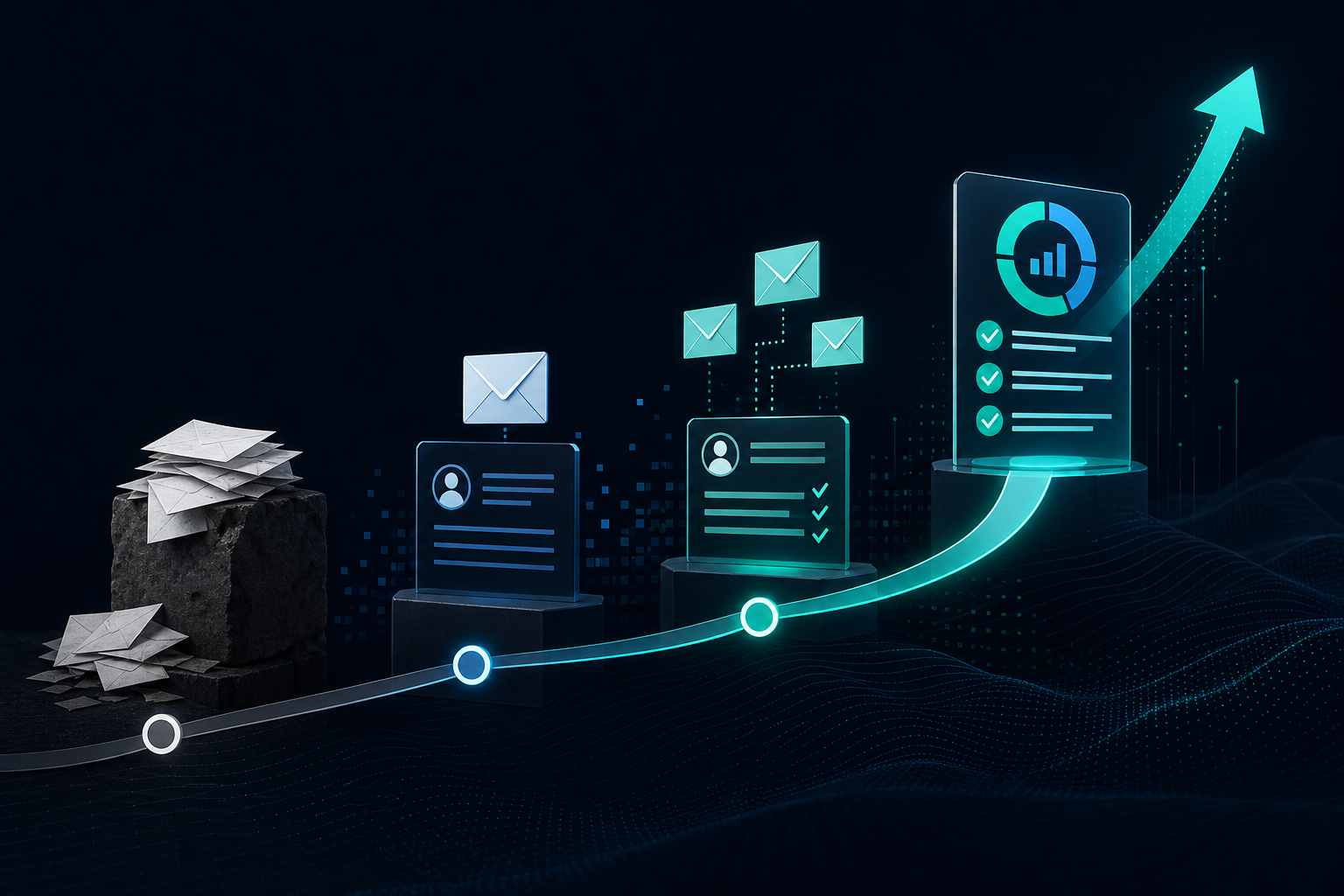
If you have spent any time running outbound sales over the last three years, you know the exact moment the market shifted. In 2023, the first wave of "AI cold email tools" hit the market. They were, almost without exception, thin wrappers around ChatGPT. You pasted a LinkedIn URL into a text box, clicked "Generate," and watched as the AI spit out a three-paragraph essay praising a prospect's "synergistic career trajectory" before pitching your product.
It was personalized, technically. But it was entirely devoid of human empathy.
By 2026, the B2B sales landscape has fundamentally changed. According to McKinsey, generative AI has moved beyond simple text generation and is actively reshaping the entire B2B sales operating model, with autonomous agents beginning to deliver massive impact on pipeline generation. The days of simply inserting {{Company_Name}} and {{Recent_News}} into a static template are over. Buyers' mental spam filters have adapted. If an email looks like it was written by an LLM on its first pass, it is deleted instantly.
Today, the dividing line in the AI sales software market is no longer about whether a tool uses AI to write emails. It is about how the AI writes those emails. Specifically, it is the difference between tools that simply generate text based on a prompt, and tools that review, score, and refine that text autonomously before a human ever sees it.
In this comprehensive guide, we are going to break down the state of AI cold email tools in 2026. We will look at why traditional templates are failing, the hidden costs of manual SDR research, and how the rise of multi-agent AI systems is solving the personalization-at-scale problem. Finally, we will compare five of the leading platforms on the market—AmroGen, Artisan, Saleshandy, Instantly, and Apollo—to help you build a tech stack that actually generates revenue.
What is an AI Cold Email Tool? (Featured Snippet)
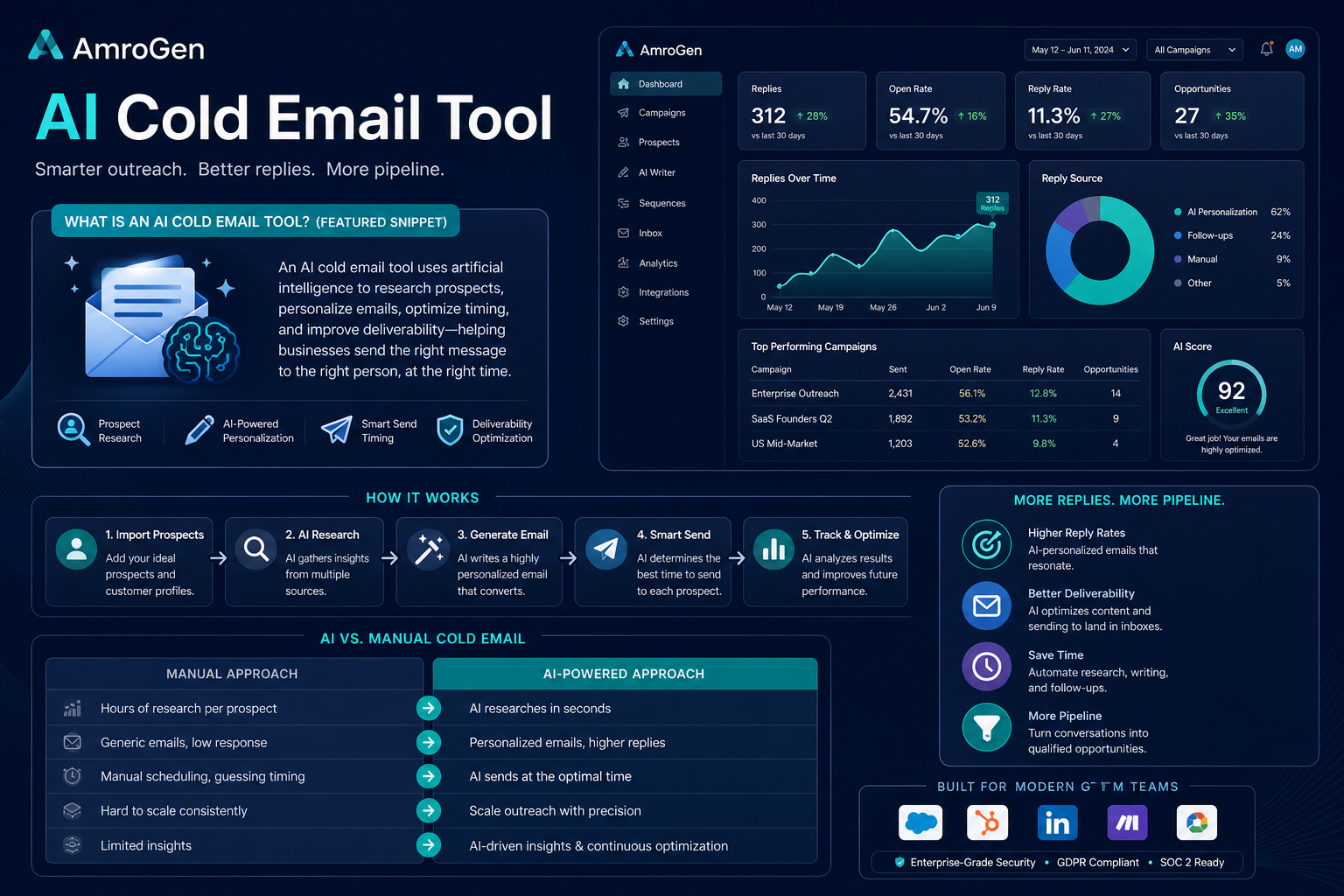
What is an AI cold email tool? An AI cold email tool is a software platform that uses artificial intelligence to automate the research, copywriting, and sending of outbound sales emails. Unlike traditional email software that relies on static templates and merge tags, AI cold email tools use Large Language Models (LLMs) to analyze a prospect's background, company data, and industry context to generate hyper-personalized, unique messages for every individual recipient at scale.
SERP & Intent Analysis: Why We Wrote This Guide
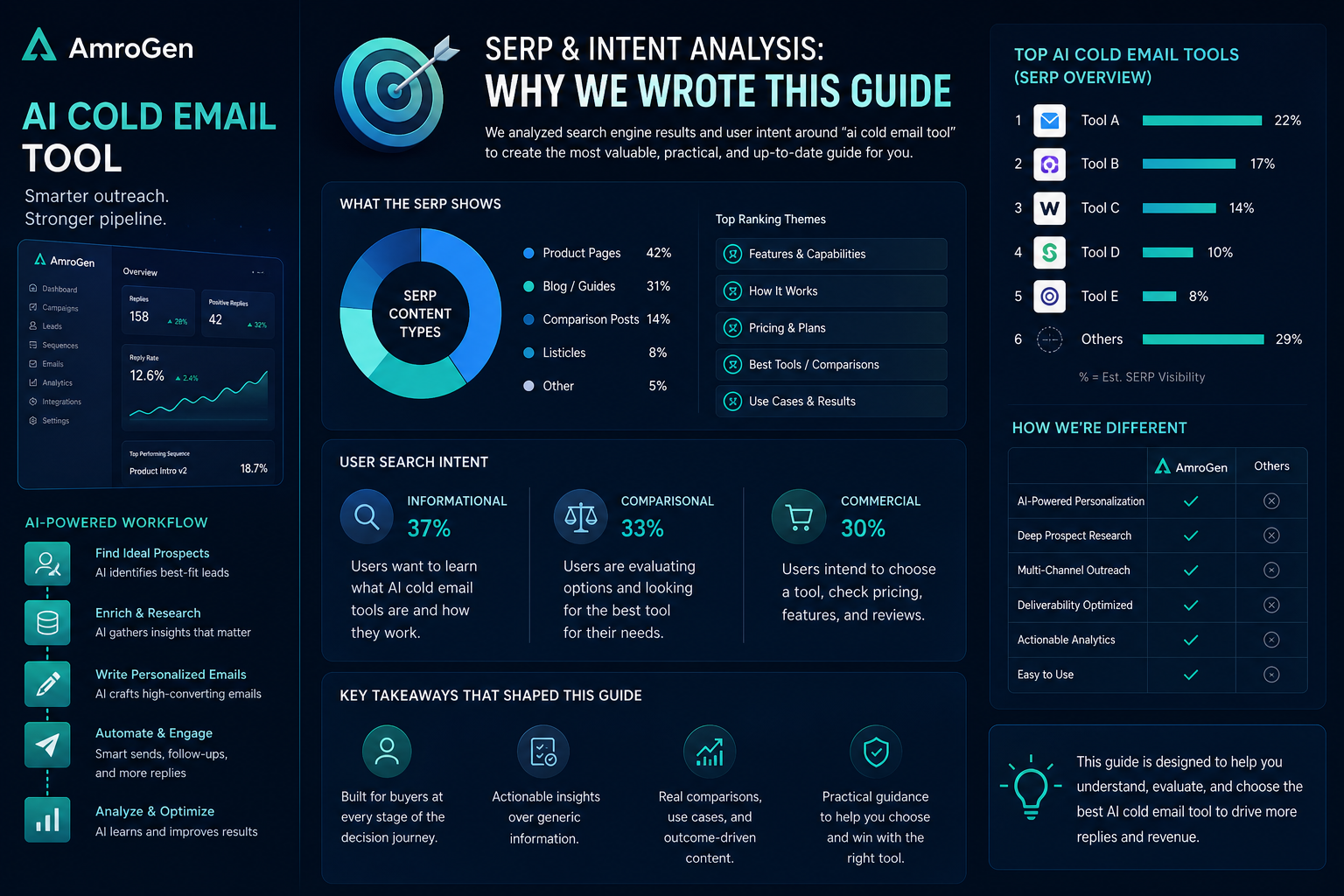
If you search for "ai cold email tool" today, you will find a mix of listicles from software review sites and content marketing plays from volume-sending platforms like Snov.io, Saleshandy, and Salesmotion.
The search intent for this keyword is primarily Commercial Investigation. Users searching this term know they have a pipeline problem. They know that hiring more Sales Development Representatives (SDRs) at $80,000–$100,000 fully loaded is too expensive. They know that manual personalization takes too long, and they know that mass-blasting generic templates results in domain burn and zero meetings. They are actively looking for software to bridge the gap.
However, the existing content on the Search Engine Results Pages (SERPs) largely misses the nuance of the 2026 market. Most competitors are still selling the 2024 dream: "Upload a list of 10,000 contacts, and our AI will spin the text so you don't hit spam filters."
This article takes a different, mid-funnel approach. We are operating on the strategic insight that scale without quality is just automated self-sabotage. We are focusing heavily on the architecture of these tools—specifically the presence or absence of a "Quality Review Loop." By owning the narrative around AI quality control, we aim to provide a more sophisticated decision-making framework for Heads of Sales, Founders, and Revenue Operations leaders who are tired of sounding like robots in their prospects' inboxes.
Internal Linking Strategy
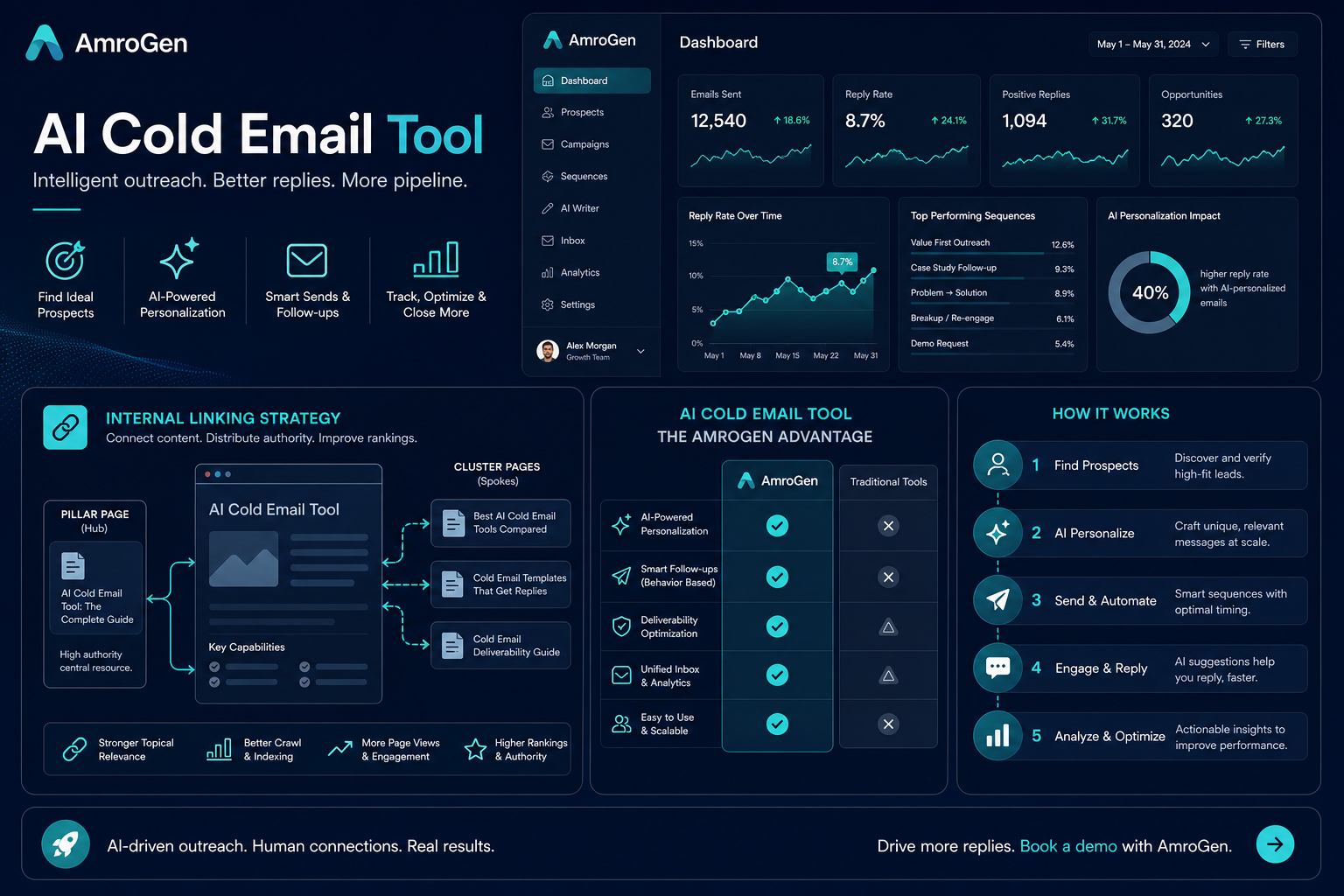
To help you navigate the broader ecosystem of AI outbound, we have mapped this guide to our core technical resources. Throughout this article, you will find contextual links to our deep dives on AI sequences (how our agentic architecture constructs multi-channel touchpoints), our broader comparison of AI SDR tools (for teams looking to automate the entire top-of-funnel), and our specific Apollo alternative breakdown (for teams looking to move away from database-first templating).
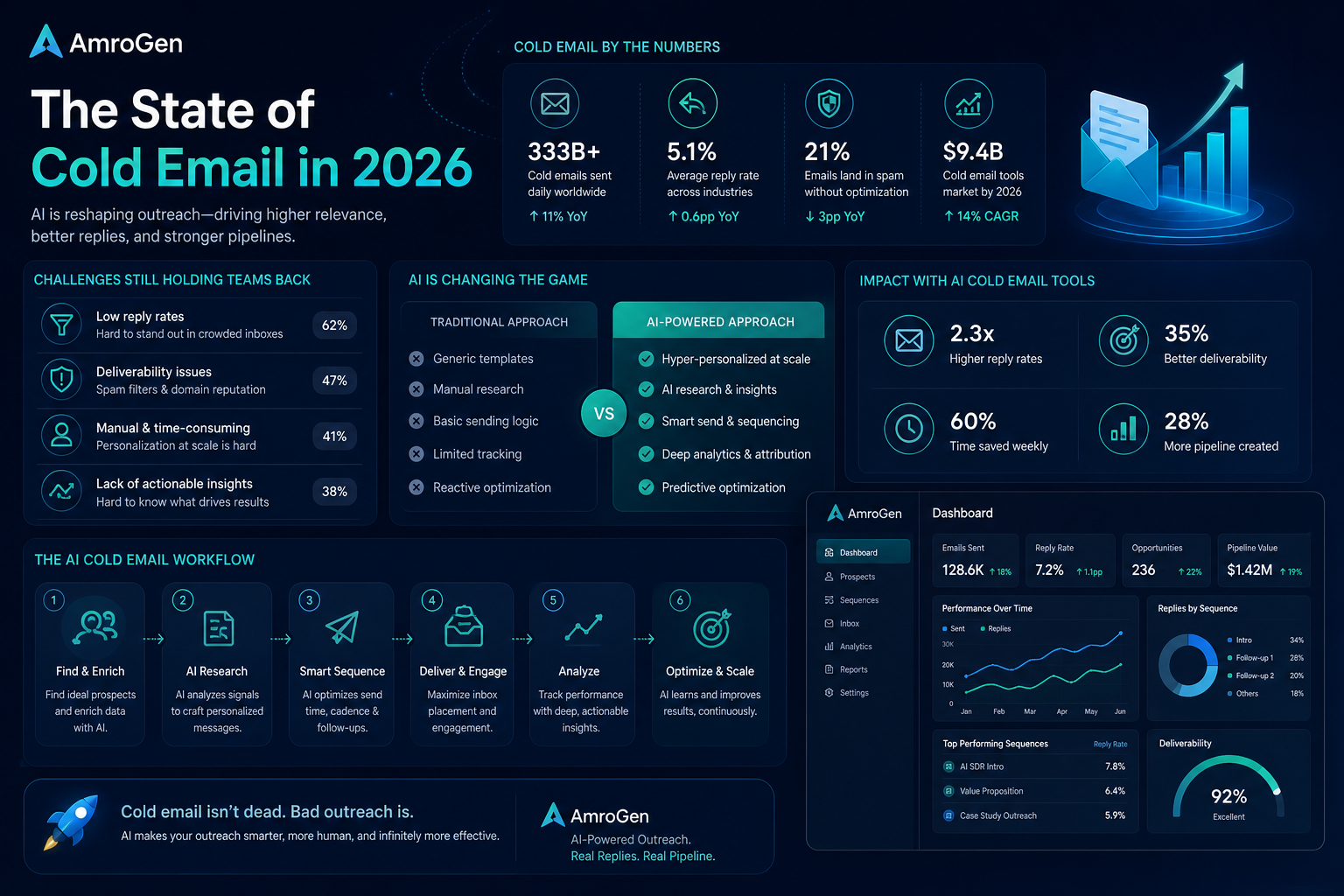
The State of Cold Email in 2026
To understand why AI cold email tools have evolved so rapidly, we have to look at the math behind modern outbound sales.
The Collapse of the Average Reply Rate
Cold email is not dead, but it has become completely unforgiving to the lazy. According to recent benchmark data analyzing over 20 million cold emails, the average platform-wide reply rate has dropped to a dismal 3.43%.
Why? Because the barrier to sending a million emails has dropped to zero. With the proliferation of cheap secondary domains, automated warmup tools, and un-reviewed AI generation, buyers' inboxes are flooded with low-effort noise.
However, that same data set reveals a massive divergence: while the average is 3.43%, B2B campaigns that utilize tight targeting, genuine account-level personalization, and structured follow-ups are regularly hitting 10–18% reply rates. The gap between average performers and elite performers has never been wider.
The Cost of Human Personalization
If genuine personalization is the key to 18% reply rates, why isn't everyone doing it? Because human personalization does not scale.
Consider the daily workflow of a traditional SDR:
- Find a target account.
- Search LinkedIn or ZoomInfo for the right decision-maker.
- Spend 10-15 minutes reading the company's recent news, 10-K filings, or the prospect's recent LinkedIn posts.
- Synthesize that information into a compelling, 75-word email that ties the prospect's specific problem to the seller's solution.
- Repeat.
A highly skilled SDR can perhaps write 30 to 40 genuinely personalized emails a day. They spend 80% of their time on research and copywriting, and only 20% of their time actually having conversations with interested buyers. When you factor in an average SDR salary of $80,000 to $100,000, the Customer Acquisition Cost (CAC) of an outbound meeting becomes unsustainably high for many growth-stage SaaS companies and agencies.
The Rise of Agentic AI in Sales
This mathematical friction is what Gartner refers to when they predict that by 2030, 80% of sales leaders will drive AI integration into sales workflows as a critical factor for competitive advantage.
We are moving away from software as a tool (something a human operates) to software as an agent (something that operates on behalf of a human). In the context of cold email, this means moving away from prompt-based generation toward multi-agent systems that handle the end-to-end pipeline: discovery, enrichment, contextualization, drafting, reviewing, and sending.
The Core Problem: The "Blank Stare" of AI Generation
Before we evaluate specific tools, we need to address the elephant in the room: most AI-generated cold emails are terrible.
If you use a basic AI tool or a raw ChatGPT prompt to write an email, it usually suffers from what we call the "Blank Stare" effect. The AI looks at the data, hallucinates a connection, and outputs something technically grammatically correct but socially awkward.
The Anatomy of a Bad AI Email:
"Hi Sarah, I see you are the VP of Sales at TechCorp and you recently went to the University of Michigan. Go Wolverines! As a VP of Sales, you probably struggle with pipeline generation. Our revolutionary synergy platform can help you..."
This fails for three reasons:
- Surface-level data: It relies on static profile data (job title, university) rather than dynamic business context (what is the company actually trying to achieve this quarter?).
- The "I saw that you" framework: It explicitly states how it found the information, which immediately signals to the buyer that this is a templated merge tag.
- Lack of self-awareness: The LLM does not know what a good cold email sounds like. It is trained to predict the next most likely token, which usually results in verbose, overly formal, marketing-speak.
The Necessity of the Quality Review Loop
To fix the "Blank Stare," an AI cold email tool cannot just generate text; it must evaluate text.
In human sales teams, a new SDR doesn't just send their first 50 emails directly to Fortune 500 CEOs. A Sales Manager reads their drafts, circles the generic parts in red ink, and tells them to try again.
Advanced AI tools replicate this dynamic using a Quality Review Loop. Instead of a single LLM prompt, the system utilizes multiple AI agents working in concert. One agent writes the draft. A separate, distinct agent (often called an Orchestrator or Evaluator) reads the draft, scores it against strict sales frameworks (e.g., brevity, relevance, lack of buzzwords), and if the score is too low, sends it back to the writer agent for a rewrite.
This loop happens in seconds, behind the scenes, ensuring that the human user only ever sees high-quality, human-sounding copy.
The 2026 Evaluation Framework for AI Cold Email Tools
When evaluating an AI cold email tool for your RevOps or sales team, you must look past the marketing hype and examine the underlying architecture. We recommend evaluating tools across these five pillars:
1. Lead Discovery & Enrichment (The Data Pillar)
AI cannot write a good email if it has bad context. Does the tool require you to upload a CSV of pre-scraped leads? Or can it discover leads autonomously? Does it just use LinkedIn data, or does it scrape the company's website, read their recent press releases, and analyze their hiring trends?
2. Context Engineering (The Prompt Pillar)
How does the tool instruct the AI? Basic tools use simple prompt injection: "Write an email to {{Name}} at {{Company}}". Advanced tools build massive context windows, feeding the AI the prospect's exact role responsibilities, the company's value proposition, and the specific pain points your product solves for that exact persona.
3. The Generation Engine (The Architecture Pillar)
Is the tool a single-prompt wrapper, or a multi-agent system? Single-prompt systems are fast but prone to generic outputs. Multi-agent systems use specialized models (one for analyzing the company, one for analyzing the person, one for writing the hook, one for writing the call-to-action).
4. The Quality Review Loop (The Safety Pillar)
Does the AI grade its own homework? Can it reject a bad draft and rewrite it automatically? What is the threshold for a "passing" grade before the email is presented to the user?
5. Sending Infrastructure (The Deliverability Pillar)
How are the emails sent? Does the tool force you to set up 10 burner domains and run them through a warmup pool? Or does it integrate directly with your primary inbox for low-volume, high-trust sending?
Tool 1: AmroGen (The Review & Refine Approach)
Best for: B2B SaaS, agencies, and founders who want hyper-personalized outreach without sacrificing quality control or managing complex data pipelines.
AmroGen was built specifically to solve the "Blank Stare" problem of early AI SDR tools. It operates on a fundamentally different architecture than volume-based senders, prioritizing the depth of personalization and rigorous quality control over sheer sending volume.
How it Works: URL to reviewed pipeline
With AmroGen, the user experience is radically simplified. You do not need to build a list in Apollo, export a CSV, upload it to Clay for enrichment, export it again, and load it into Lemlist.
You simply input a target company's website URL.
In a full agent run, AmroGen's agents:
- Crawl the target website to understand their business model, ICP, and recent news.
- Discover real, researched decision-maker leads that match your buyer personas.
- Enrich those leads with contact details where available.
- Generate a hyper-personalized, multi-channel sequence (Email, LinkedIn, SMS) for each individual lead.
The Differentiator: The 6-Agent Quality Review Loop
AmroGen's defining feature is its multi-agent architecture, powered by specialized Anthropic Managed Agents. Instead of one AI trying to do everything, AmroGen deploys a coordinated pipeline of six agents.
The most critical of these is the Orchestrator Agent. The Orchestrator acts like a ruthless, senior VP of Sales. When the Copywriter Agent finishes drafting an email sequence, it hands it to the Orchestrator. The Orchestrator scores the output on a scale of 1 to 10 based on personalization depth, tone, brevity, and relevance.
If the score is below a 7, the email never reaches the user. The Orchestrator sends it back to the Copywriter with specific feedback (e.g., "This sounds too templated, you relied too much on their job title. Rewrite focusing on the recent product launch mentioned in their company news."). The system will retry up to 3 times to achieve a passing score.
Infrastructure and Integrations
- Sending: AmroGen sends via Resend (preferred when connected) or Gmail OAuth. Because the emails are highly personalized and sent at human volumes, there is no need for complex domain warmup or cold sending infrastructure. Emails land in the primary inbox. You review and approve every sequence before a single email goes out.
- AI-Native Flexibility: AmroGen features a built-in MCP (Model Context Protocol) server. This makes it the only outreach platform on the market that can be called directly by Claude Desktop and other AI agents. If you are an AI-native builder, you can plug AmroGen into your existing automated workflows via REST API or MCP.
Pricing
AmroGen uses a credits-based subscription model, consuming credits per pipeline run (URL to ready-to-send outreach).
- Starter: $29/month (100 credits, ~12 pipeline runs)
- Growth: $99/month (500 credits, ~62 pipeline runs)
- Scale: $299/month (2,000 credits, ~250 pipeline runs)
- Pay-as-you-go: $0.35/credit
Note: One pipeline run typically yields 10–100 researched leads (you choose the count per run) with fully written email sequences plus LinkedIn/SMS copy. At $2.80 per run on Pay-as-you-go, the cost is a fraction of a human SDR's time.
Pros & Cons
Pros:
- Unmatched copy quality due to the 6-agent review loop.
- True "zero-to-one" workflow: just input a URL, get ready-to-send sequences.
- Developer-friendly with REST API and MCP server integration.
- Protects brand reputation by ensuring messages sound human.
Cons:
- Not designed for mass spray-and-pray volume (if you want to send 10,000 identical emails a day, this is the wrong tool).
- Requires a Gmail account connection (no native support for Outlook/Exchange yet).
Tool 2: Artisan (The All-in-One AI BDR)
Best for: Well-funded startups and mid-market companies looking to completely outsource the BDR function to an AI platform.
Artisan has made waves by anthropomorphizing their software. You don't just buy Artisan; you "hire" Ava, their AI BDR. Artisan aims to be an all-in-one replacement for the entire outbound stack, encompassing data, sequencing, and inbox management.
How it Works
Artisan features a massive B2B database (similar to Apollo or ZoomInfo). You set up your ideal customer profile (ICP) parameters, and "Ava" autonomously finds leads, writes emails, and schedules them. Artisan also handles the backend infrastructure, helping you set up sending domains and manage warmup.
The AI Generation Method
Artisan's personalization is strong, leaning heavily on comprehensive data enrichment. Ava can reference a prospect's recent company milestones, funding rounds, or specific technologies used on their website. However, because Artisan is built to handle higher volumes than a tool like AmroGen, the AI tends to rely on a slightly more structured, programmatic approach to generation. It is highly efficient, but can occasionally fall into recognizable patterns if you scale the volume too high.
Pros & Cons
Pros:
- Complete end-to-end platform (data, sending, AI, inbox management).
- Beautiful, intuitive user interface.
- "Ava" handles replies and objection handling, not just initial outreach.
Cons:
- Extremely expensive compared to other tools (often running into the thousands of dollars per month).
- Platform lock-in: you must use their entire ecosystem.
- Less transparent about the internal AI review mechanics (no visible scoring loop).
Tool 3: Saleshandy AI Copilot (The Volume Sender's Assistant)
Best for: Lead generation agencies and growth marketers who need to manage hundreds of inboxes and want AI to speed up template creation.
Saleshandy has long been a staple in the cold email deliverability space. They are known for their robust infrastructure, allowing users to connect unlimited email accounts, utilize sender rotation, and manage massive uniboxes. Recently, they introduced their AI Copilot.
How it Works
Unlike AmroGen or Artisan, Saleshandy is a "Bring Your Own Data" platform. You must source your leads elsewhere (Apollo, Ocean.io, etc.), clean the list, and upload a CSV.
The AI Copilot in Saleshandy functions primarily as an advanced writing assistant. You provide a prompt about your product, and the AI generates sequence templates. It also includes AI-powered "spintax" (spinning text), which creates hundreds of slight variations of the same email (e.g., changing "Hi" to "Hello" to "Hey") to trick spam filters into thinking each email is unique.
The AI Generation Method
Saleshandy's AI is built for deliverability protection, not necessarily hyper-personalization at the individual human level. It relies on standard merge tags ({{First_Name}}, {{Company}}). While it can write a solid, concise cold email template, it does not dynamically research every individual lead on your CSV to write a bespoke message from scratch.
Pros & Cons
Pros:
- Top-tier deliverability infrastructure (unlimited inboxes, sender rotation).
- Very affordable for high-volume sending.
- AI spintax effectively protects domain reputation at scale.
Cons:
- No native lead discovery or enrichment.
- AI generates templates, not individualized, researched messages.
- Still requires significant manual work to build and clean lists.
Tool 4: Instantly Copilot (The Deliverability First Approach)
Best for: Cold email power users who prioritize inbox placement and volume above all else.
Instantly took the cold email world by storm a few years ago by offering unlimited email accounts for a flat fee, revolutionizing the way lead gen agencies operated. Like Saleshandy, their core competency is infrastructure.
How it Works
Instantly has recently expanded into data with "Instantly B2B Lead Finder," allowing users to search for contacts directly within the platform. Their AI features are heavily focused on sequence generation and campaign optimization. You give the AI your website URL and value prop, and it will generate a 3-to-5 step sequence.
The AI Generation Method
Instantly's AI is highly optimized for brevity and deliverability. It writes very short, punchy emails that avoid spam words. However, similar to Apollo and Saleshandy, the AI is generating a template that will be applied to a list, rather than acting as an agent that researches and writes a unique email for Lead A, and a completely different email for Lead B.
They do offer AI personalization tags, where you can use AI to generate a custom icebreaker for each row in your CSV based on data you provide, but this requires significant prompt engineering from the user to avoid the "Blank Stare" effect.
Pros & Cons
Pros:
- Incredible value for the volume of emails you can send.
- Built-in warmup network is one of the largest in the industry.
- Very active community sharing prompt engineering tips.
Cons:
- Personalization is often limited to a single "Icebreaker" sentence at the top of a generic template.
- High risk of writing generic copy if the user doesn't know how to prompt effectively.
Tool 5: Apollo AI Sequences (The Database Giant's Add-on)
Best for: Revenue teams already fully entrenched in the Apollo ecosystem who want to speed up their SDR workflows.
Apollo.io is the undisputed heavyweight champion of B2B data. Almost every sales team uses Apollo at some point to find emails and phone numbers. Naturally, Apollo has built a sequencing tool, and recently, integrated AI into that tool.
How it Works
Because Apollo owns the data layer, their AI has immediate access to a wealth of information. You can select a list of 100 contacts, click "Generate AI Sequence," and Apollo will use the data in its system to draft the emails.
The AI Generation Method
Apollo's AI falls firmly into the "Generation" category rather than the "Review" category. It uses prompt-based templating. You create a master prompt, and Apollo fills in the blanks using its database.
The major drawback here is data freshness and context. While Apollo has massive scale, contact data degrades quickly. Furthermore, Apollo's AI does not typically crawl the live web to find out what a company did yesterday; it relies on what is in the Apollo database. This can lead to AI emails referencing outdated funding rounds or old job titles.
If you are looking for an Apollo alternative specifically because your sequences are feeling stale and getting low reply rates, moving to an agentic workflow is the next logical step.
Pros & Cons
Pros:
- Unbeatable database size; everything is in one platform.
- Seamless transition from search to sequence.
- Strong integrations with Salesforce and HubSpot.
Cons:
- AI output is heavily templated.
- Lacks a multi-agent quality review loop; requires heavy manual editing by SDRs to sound natural.
- Contact data is often outdated, leading to embarrassing AI hallucinations.
Head-to-Head Comparisons
To make the best decision for your team, it helps to view these tools through specific competitive lenses.
Data vs. Personalization: Apollo vs. AmroGen
If your primary goal is to acquire 10,000 emails for a Total Addressable Market (TAM) mapping exercise, Apollo is the winner. But if your goal is to break into 50 highly targeted, tier-one accounts, Apollo's AI will likely generate templates that get ignored. AmroGen wins here because it crawls the live URL, finds the specific decision-makers, and uses a 6-agent loop to write bespoke copy that actually gets read.
Scale vs. Quality: Instantly vs. AmroGen
Instantly is built for horizontal scale (sending 1,000 emails a day across 30 inboxes). AmroGen is built for vertical depth (sending 50 hyper-personalized emails a day from your primary inbox). If you are selling a low-ticket, high-volume product, Instantly is great. If you are selling high-ticket B2B SaaS, consulting, or agency services where burning a bridge with a prospect costs you a $50k deal, AmroGen's review loop is mandatory.
Full Platform vs. Agentic Workflow: Artisan vs. AmroGen
Artisan wants to be your entire sales tech stack, which is great if you have the budget and want zero technical setup. AmroGen is built for flexibility and integration. Because AmroGen has an API and an MCP server, it can act as the "outbound engine" inside a broader AI workflow that you control (for instance, triggering a campaign automatically when a target account raises funding).
How to Build an AI Cold Email Tech Stack in 2026
If you are a Founder, RevOps lead, or AI-native builder, you likely don't want a monolithic tool. You want a composable tech stack. Here is how top-performing teams are building their outbound engines in 2026:
1. The Trigger (Signal Intelligence)
Instead of arbitrary list building, campaigns should be triggered by signals. This could be intent data (e.g., Bombora, G2), funding alerts, or hiring signals.
2. The Orchestration Layer (AI Agents)
This is where MCP (Model Context Protocol) becomes a game-changer. Using tools like Claude Desktop or a custom n8n workflow, you can build an AI agent that monitors your signals.
When a signal fires (e.g., "Target Account X just hired a new VP of Marketing"), your custom agent can call AmroGen via MCP.
3. The Execution Layer (AmroGen)
AmroGen receives the URL from your agent. In a full agent run, it researches the new VP of Marketing, enriches their contact info, writes a hyper-personalized email referencing the recent hire, scores it, refines it, and stages it in your Gmail.
4. The CRM Sync
Once the email is approved and sent, the data syncs back to your CRM (Salesforce/HubSpot) to ensure your reporting is accurate.
This composable, agentic stack requires zero SDR headcount and operates 24/7, generating pipeline with higher quality than a human team could achieve manually.
Best Practices for AI Cold Email Personalization
Even with the best AI tools, the strategy dictates the outcome. According to sales intelligence platform Gong, top-performing reps book 8.1x more meetings than average reps, not by sending more emails, but by sending better emails.
Here is how to instruct your AI (or configure your AI tools) to write emails that actually convert in 2026:
1. Ditch the "Sales Pitch"
Gong's data is conclusive: pitching your product in a cold email reduces reply rates by as much as 57%. Do not let your AI write paragraphs about your features. Instruct the AI to focus entirely on the prospect's problem. The email should be a mirror reflecting their pain, not a billboard for your solution.
2. Use "Internal Camo" Subject Lines
The most effective subject lines in 2026 do not look like marketing. They look like internal company messages. Gong research reveals that the best subject lines are short (four words or fewer), lowercase, and use priority-based language.
- Bad (AI default): "Revolutionizing Your Sales Pipeline with TechCorp"
- Good (Human/Agentic): "new sales trainer hire" or "q3 outbound goals"
3. Shift to Interest-Based CTAs
Stop asking for 15 minutes of their time. C-level executives are 30.2% less likely to reply to cold emails than non-executives. Asking for a meeting creates massive psychological friction.
Instead, use interest-based Calls to Action (CTAs). Research shows that interest CTAs (e.g., "Are you open to learning more?" or "Worth a chat?") achieve up to 30% response rates compared to 15% for direct booking requests. AmroGen's Orchestrator agent is explicitly trained to favor low-friction, interest-based CTAs during its review loop.
4. Keep it Under 75 Words
LLMs naturally want to be helpful, which means they naturally want to be verbose. A standard ChatGPT prompt will write a 250-word email. Nobody reads 250-word cold emails on their phone. Your AI tool must aggressively edit for brevity.
FAQ (People Also Ask)
What is an AI cold email tool?
An AI cold email tool is a software platform that automates the research, drafting, and sending of outbound sales emails. Advanced tools use multi-agent AI architectures to analyze a prospect's business context and generate highly personalized, unique messages for every recipient, replacing the need for static templates.
Which AI tool writes the best cold emails?
The quality of AI-generated emails depends entirely on the presence of a Quality Review Loop. Tools that rely on single-prompt generation (like Apollo or basic ChatGPT wrappers) often produce generic, robotic copy. Tools like AmroGen, which use multiple specialized agents to draft, score (1-10), and rewrite emails before they are seen by the user, consistently produce the most human-sounding and effective copy.
Does AI cold email personalization work?
Yes, but only if it is genuine account-level personalization. Superficial personalization (e.g., "I saw you went to X University") is now easily recognized by buyers as automated and is largely ignored. Deep personalization—where the AI connects a specific company initiative, recent news event, or role responsibility to your value proposition—consistently outperforms generic templates, driving reply rates into the 10-18% range for top performers.
What is the best free AI cold email tool?
While completely free AI cold email tools are rare due to the API costs of running Large Language Models, many platforms offer low-cost entry points. AmroGen, for example, offers a Pay-as-you-go model at $0.35 per credit, allowing you to run a full pipeline (URL to ~10 personalized leads) for less than $3.00, making it highly accessible for founders and small teams testing outbound.
Conclusion: Stop Generating, Start Reviewing
The era of mass-blasting generic templates is over. As buyers become increasingly sophisticated and inboxes become more heavily guarded by spam filters, the only way to succeed in outbound sales is through genuine, contextual personalization.
For years, this meant hiring armies of SDRs to spend hours doing manual research. Today, the choice is different.
You can choose an AI tool that simply generates text—filling in the blanks of a template at lightning speed, allowing you to send thousands of mediocre emails that ultimately damage your brand and yield zero meetings.
Or, you can choose an AI tool that reviews text. By leveraging multi-agent systems like AmroGen, you can build an automated pipeline that discovers the right buyers, writes bespoke copy, scores its own work, and lands in the primary inbox—all in the time it takes to drink a cup of coffee.
If you are ready to 2x your pipeline without adding headcount, and you want copy that sounds like a thoughtful human actually wrote it, it is time to upgrade your tech stack.
Create your first campaign with AmroGen today. Point it at a URL, and watch your pipeline build itself.